
My father died last October. We were never what anyone would call especially close, in part because of what we have in common and in (larger) part because I don’t think he ever learned (with his two daughters, that is) to let his guard down and just be. The  events of his life had constructed a hard shell around him – or rather, he had constructed it as a means of defense – and any sort of crack or soft spot in that armor was considered a weakness. Tasks were meant to be carried out without complaint or mistake, because if you were going to do something, it should be done right.
On the morning of my father’s death, he looked at my mother and informed her that he was ready to set sail. She, accommodating his analogy as she did in seemingly all facets of their life together, told him that he could not yet punch his ticket because Catherine was on her way. And I was.
When I arrived at the hospital in North Carolina after having made the drive from Georgia, my father was sleeping. At my mother’s prodding, he awoke, and after slowly focusing his eyes on the room around him, they found my face. As I managed a cheery face and matching voice, telling him that I was glad to see him and that I was so happy to have a weekend free from coaching to do so, he began talking. His voice, both vehement and garbled, formed words I could not understand but were undoubtedly meant for me. I nodded as I listened and stared at the face of the person who for so long made me feel flawed but whose tiniest approval meant the most – hard as I tried not to feel that way.
He quieted and sighed. Turning back to my mother and aunt, I started asking questions about his condition, this sharp turn for the worse. A nurse, in the room to prepare my father to be moved, checked IVs and monitors behind me.
“Mr. Ryan?”
The question in her voice turned the three of us around. I already knew what it meant. I felt it in the pit of my stomach. And while his waiting for me meant so much, this loss – that has hit me so much harder than I expected – has left me filled with more questions than answers.
Whether or not we believe it – or want to admit it – 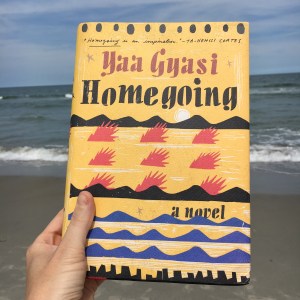 the oftentimes paradoxical relationships we have with our families influence us. Sometimes those people and expectations drive us, but they can also suffocate us. Sometimes they push us to discover ourselves, but they can also make us feel as though who we are is being – or has already been – decided for us.
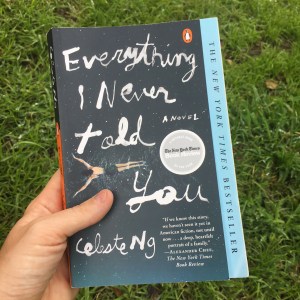
I just finished reading two novels concerned with these very subjects: Homegoing by Yaa Gyasi and Everything I Never Told You by Celeste Ng. At the heart of each of these pieces is the structure and upheaval that our families and the world around us can bring as we navigate our lives. While the characters in each novel are dealt different challenges throughout, both Gyasi and Ng create relatable individuals about whom I cared from beginning to end.
I have long been a fan of authors who can capture family dynamics in a way that feels very familiar to me as a reader while still incorporating elements of culture and experiences that are new to me. Jhumpa Lahiri (author of The Namesake, Interpreter of Maladies, and Unaccustomed Earth) is the artist who always comes to mind when I think of that particular skill, and the families who come to life underneath Gyasi and Ng’s pens (although very possibly not literally – do many authors write longhand these days?) are certainly reminiscent of that expertise.
Homegoing begins with an epigraph. The Akan proverb (translated) states that “The family is like the forest: if you are outside it is dense; if you are inside you see that each tree has its own position.” The family members in Gyasi’s novel are connected through blood (and over time and the sea) despite often experiencing very different struggles and awakenings; the depth and beauty inherent in each individual character as he/she steers through these trials ties them to each other as well as pulling me into the saga as a whole. The story follows descendants of two children born to the same woman in Ghana and sweeps over hundreds of years from start to finish. While the scope of the story as a whole is undoubtedly large, the brevity of each look into the life of one individual and then the next from each side of the family tree left me longing for more. Gyasi’s prose manages to touch on the complexities of each character before turning our eyes to the next (often long before I was ready to do so) and to trigger more emotion in me than I expected in so few pages at a time. I am never going to complain about a novel that pulls me in and then leaves me wanting more, and that is exactly how I felt as I finally closed this beautiful novel.
Ng’s Everything I Never Told You takes on the subject of families as well, but in this novel, the conflict is caused by what her characters choose to – and more importantly, choose not to – share with the other members of their family. I am a sucker for an opening passage that leaves me no choice but to continue reading, and the first three sentences of this story are the epitome of just that:
Lydia is dead. But they don’t know this yet. 1977, May 3, six thirty in the morning, no one knows anything but this innocuous fact: Lydia is late for breakfast. (Ng 1)
Seriously – how do you not take home a novel that begins in such a way? (Disclaimer: I have certainly been proven wrong when choosing a piece in this manner, but more often than not, if an author can draw me in with the words on those first few pages, there is a good chance that the story as a whole will do the same.)
This particular novel follows the members of the Lee family, and the tragedy Ng mentions in that first sentence serves as a catalyst for the examination of the secrets which they willingly keep from those people who are “closest” to them. The paradox here lies in the fact that while we share blood with our immediate family members and (often) share close physical proximity with them, that is no guarantee that we actually share with them who we are and what we feel and need at our core. So many times – as is shown in this particular story – we hide those things from our family in an attempt to please, satisfy, or simply not to disappoint those whose opinions – whether we like it or not – mean the most to us. Marilyn and James Lee, as well as their deceased daughter Lydia and two surviving children Nath and Hannah, are masters at hiding their true identities from those people with whom they share a last name, and part of the fallout of this unexpected loss is a number of revelations that are long-overdue. By its conclusion, Ng’s novel proves to be at once heartbreaking and cathartic.
The end of each of these novels was not really an end though. 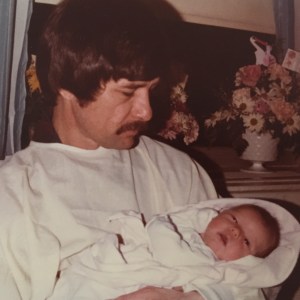 As my eyes scanned the last words on each last page, I left the stories sure that they would continue – that the journeys of the characters Gyasi and Ng have created (those individuals who came to feel so real to me) were not finished; they had more to explore and learn, more questions left to answer. To be fair, that is something that I appreciated about both of them as works – there was no neat package and bow as they ended. And if that is the case in these works – something that feels so natural and real – how can I expect the conclusion of my father’s life to suddenly bring me closure and answers?
I guess that is the question I really need to answer.
 The Running Bibliophile